
AI chatbots in government: What works and what doesn’t
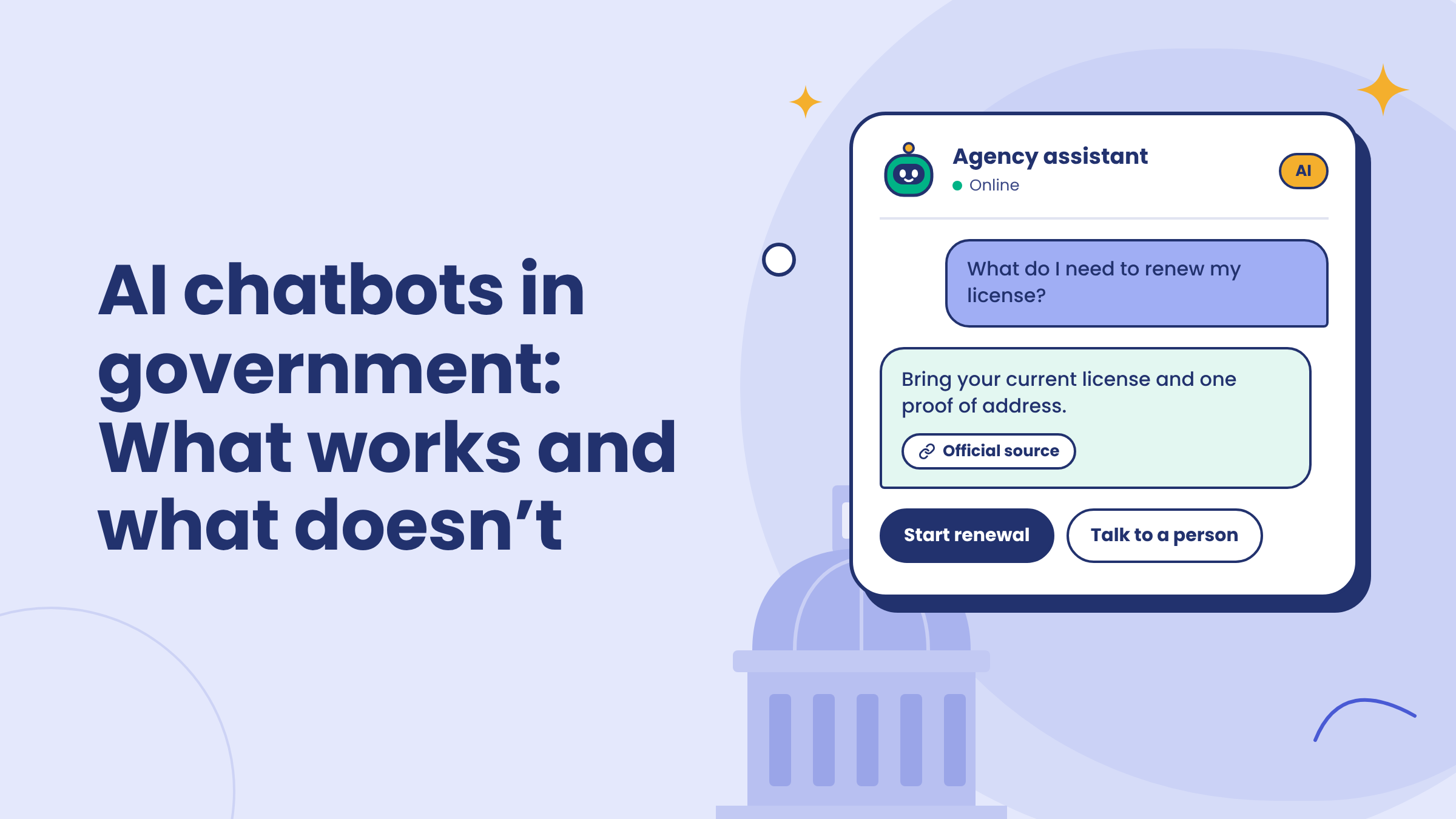


A resident asks an agency’s chatbot what documents they need to renew a license. A good answer saves them a trip. A wrong one costs them one.
Residents are willing to test out AI for simple questions, but comfort only gets them to try it. They come back when the assistant gives accurate answers, makes the next step clear, and connects them to a person when it can’t help. Agencies should build for those outcomes and measure them, not just count how many calls the chatbot deflects.
Residents’ comfort depends on the task
The 2026 PayIt Digital Government Adoption Index found that 64.7% of surveyed digital government users are comfortable with AI answering questions about services and policies. That falls to 49.2% when AI evaluates eligibility for a government benefit.
Explaining how to apply and deciding whether someone qualifies have different consequences for residents. Agencies should consider those consequences when choosing where to use AI. Comfort with a tool may encourage residents to try it, but useful, accurate help is what gives them a reason to use it again.
What works: answers residents can use
A useful assistant helps residents find a service, understand requirements, or work through a confusing step.
Researchers at the University at Albany interviewed staff at 22 state agencies and found that chatbots helped answer routine questions and provide information outside office hours.
For a registration renewal, that might mean a link to the official service and instructions for getting started. During an application, it could mean explaining which number from a notice belongs in a field. Answers should use current agency information and include sources residents can check.
What doesn’t: wrong answers and nowhere to turn
An answer can sound convincing and still be wrong. Incorrect guidance about documents, deadlines, or payments creates extra work. A disclaimer will not recover a wasted trip.
Repeated suggestions can be just as frustrating. If a resident has already tried a step, the assistant should offer another option or help them reach staff. That route should be obvious. If staff are unavailable, explain how to request help and when to expect a response. For agents that submit applications or make payments, residents should review and confirm the details first, then receive a record of what happened.
What agencies should require
The University at Albany survey found that 87% of residents support agencies telling them when AI is involved in delivering a service. Clearly label the assistant and explain its role.
Use agency-approved sources and assign someone to keep them current. When information is missing or conflicting, the assistant should say so. Explain why personal information is needed and how it will be used, with a secure process for sensitive details.
Before launch, test unclear questions, unusual circumstances, and failed transactions. Include people with different accessibility and language needs, and keep other ways to get help available.
Check what happens after the chat
Fewer calls do not necessarily mean better service. Some agencies in the university research reported that chatbots shifted requests between channels rather than reducing demand.
Track whether residents finish their tasks, get accurate guidance, and contact the agency again about the same issue. Check whether transfers reach the right staff without making residents repeat themselves. Start with a specific task and fix recurring problems before expanding. For someone renewing a license, for example, success means getting the right information, knowing what to do next, and being able to reach help.
Explore the 2026 PayIt Digital Government Adoption Index for more research on resident attitudes toward AI and online services.
You might also like
Useful GovTech insights — right in your inbox
Get articles and insights from our monthly newsletter.