Hidden costs of outdated government payment processing systems


Managing constituent payments is an essential government function that impacts everything from the experience customers have when paying their bills to how agencies reconcile and budget internally.
Yet many government agencies still rely on legacy payment processing systems that, while functional, often cost more than they appear to. Upgrading payment processing software may seem like a big investment, but the hidden costs of sticking with outdated technology often exceed the price of modernization.
Additional resource Build vs. Buy: Choosing the Best Path for Government Technology
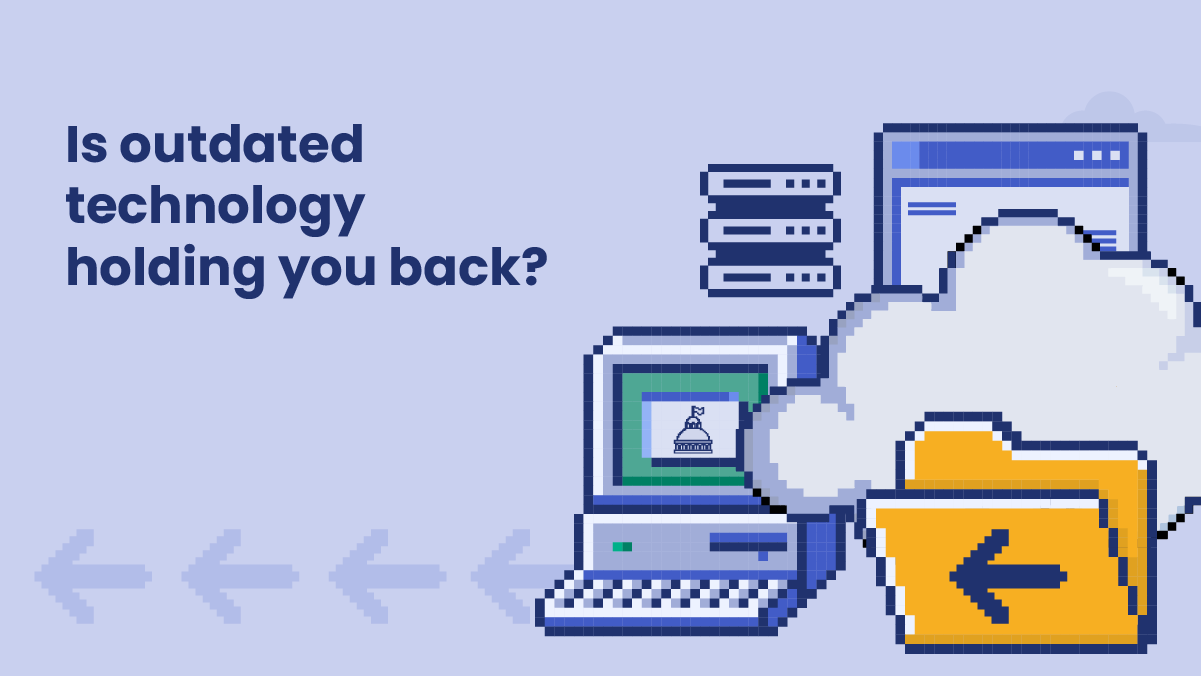
Is legacy payments technology holding your agency back?
After a decade or so of the same systems, small inefficiencies seem normal. However, ignoring those problems doesn’t just mean dealing with minor inconveniences. The extra steps, workarounds, and additional maintenance costs add up.
Hidden costs of outdated payment technology
1. Increased operational time and costs
Older tech suffers from frequent downtime and other inefficiencies, leaving manual processes in place to compensate for limitations. Things such as data entry, troubleshooting, and reconciling payments take up precious staff hours — and add up in labor costs.
Reconciliation, for example, depends on transparency and traceability. Legacy platforms often depend on manual recordkeeping, which introduces human error and hinders the ability to quickly produce audit-ready documentation for regulators.
2. Compliance challenges
Some legacy government technology systems were built before today’s stringent compliance standards were established (e.g., PCI DSS). Systems that weren’t designed with these regulations in mind require retrofitting for compliance, which is complex and costly.
Fragmented systems also make compliance a challenge. Older government tech is often made up of stitched-together databases (and sometimes on-premises hardware), which complicates compliance monitoring. When payment data moves between multiple unintegrated systems, ensuring a consistent compliance posture across all environments is nearly impossible.
Even when agencies retrofit systems for compliance, outdated security foundations continue to create risk.
3. More security vulnerabilities
Many legacy solutions lack newer security features like tokenization, end-to-end encryption for transactions, and automated logging and monitoring tools for audit readiness. Older government payment systems rely on weak or outdated encryption protocols, and some fail to encrypt sensitive data at all. This makes it easier for bad actors to intercept payment data, personally identifiable information (PII), or authentication credentials.
Many also lack modern identity and access management (IAM) measures, meaning access controls and role-based permissions are absent, increasing the chance of insider threats or unauthorized access.
In some cases, obsolete operating systems and software no longer receive security patches or vendor support. That means that any newly discovered vulnerabilities remain unpatched, leaving systems at risk of a breach.
4. Limited integration capabilities
Before open standards or APIs became the norm, many legacy government technologies were built using proprietary architectures and custom code. These systems weren’t designed to “talk” to external applications, so data exchange requires manual exports, file transfers, or point-to-point connections.
Without modern tech, agencies are stuck with batch processing or siloed systems. As a result, integrating with newer platforms (such as digital payment portals, CRM tools, or digital ID systems) becomes a little more tricky. This makes it difficult for agencies to adopt new tools, collaborate effectively, and scale.
5. Poor user experience
Because legacy infrastructure is frequently overloaded, under-maintained, or incompatible with modern cloud architectures, customer transactions can be slow to process. Even worse, systems crash under high demand (such as during tax season or hunting license draws). These performance issues inconvenience residents and reflect poorly on the agency.
Nowadays, residents expect multiple payment options and self-service tools like instant payment confirmation, digital receipts, and real-time updates. But legacy systems rarely offer these capabilities, forcing residents to call or visit offices in person for basic inquiries.
Similarly, since outdated payment systems often operate in isolated silos, residents have to navigate multiple websites or portals to complete tasks one at a time. (For example, paying a utility bill, renewing a license, and submitting a permit might require separate logins and redundant data entry.) This fragmentation leads to frustration, longer completion times, and reduced trust in government digital services.
6. Accessibility issues
Older government applications were designed for desktop use and often don’t meet today’s standards for mobile responsiveness and accessibility. Many legacy systems fail to comply with WCAG (Web Content Accessibility Guidelines), making them difficult or impossible for residents with disabilities to use. For example, forms that don’t resize properly on mobile devices discourage engagement, especially among people who rely primarily on smartphones.
7. Difficult maintenance requirements
One of the most well-known downsides of outdated tech infrastructure is the maintenance costs. Engineers who are well-versed in older code languages (like COBOL) are getting harder to come by, making even little updates and patches more expensive. And in many agencies, a small number of long-tenured employees possess critical institutional knowledge that keeps these systems running, creating risk and cost when those individuals retire or leave.
Upgraded government payment processing systems lead to long-term benefits
Holding onto outdated technology may seem like a budget-friendly idea, but in reality, it leads to hidden costs that negatively impact security, efficiency, and user experience. All of these small issues add up, increasing staff workload and frustrating residents.
Modern payment technology delivers lasting improvements to digital government services:
- Improved efficiency: Automates reconciliation, reporting, and compliance monitoring so staff can focus on higher-value work
- Enhanced security: Built-in encryption, tokenization, and continuous vendor patching protect sensitive data
- Seamless integrations: API-first architecture connects back-end systems with CRMs, payment portals, and other SaaS tools
- Better user experience: Residents can pay anytime, on any device, and receive instant confirmations and reminders
- Lower maintenance costs: Cloud-based solutions eliminate expensive hardware upkeep and reduce reliance on scarce legacy expertise
- Future-ready scalability: Flexible infrastructure supports new payment types, digital wallets, and regulatory changes without costly rebuilds
Looking for more content?
Get articles and insights from our monthly newsletter.