
Digital credentials and titles make waves at AAMVA AIC 2026
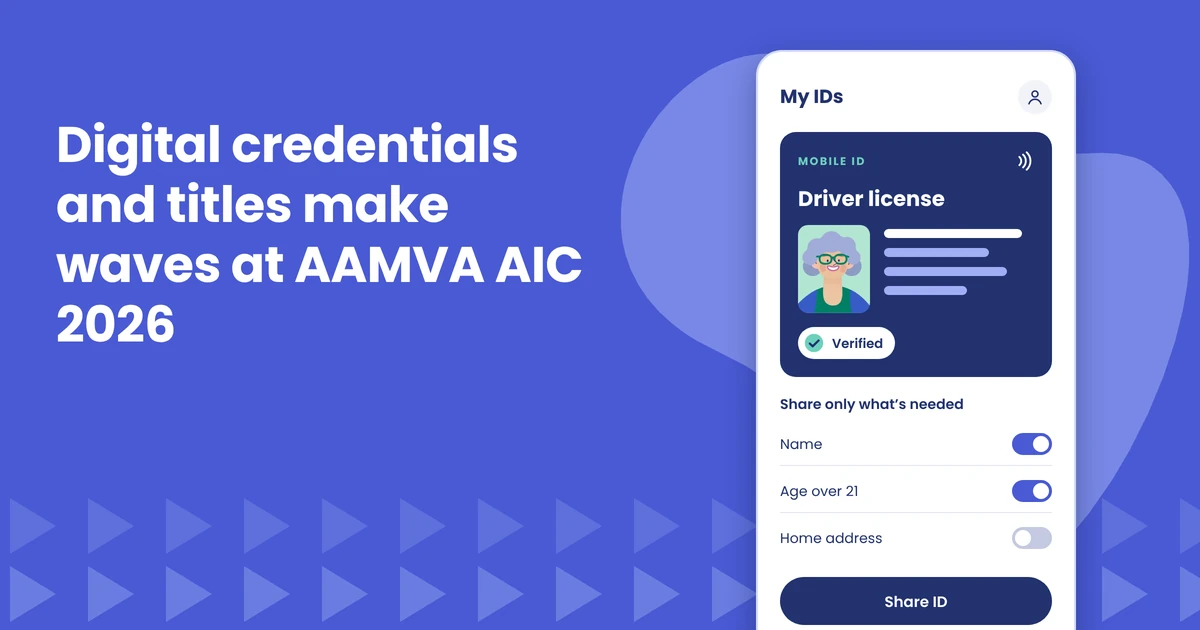


Agencies from across the world gathered in Providence, Rhode Island, for the 2026 AAMVA International Conference. While 2025 focused on emerging AI models and what it would mean for agencies and their constituents, 2026 centered on digital identity proofing and digital titling initiatives, and on how jurisdictions can work together to deliver digital services without sacrificing interoperability across state lines and between state and federal agencies.
Key points: AAMVA AIC 2026
- Digital identity proofing and digital titling took center stage, following 2025’s focus on AI.
- Interoperability and acceptance across jurisdictions is key to successfully offering digital credentials such as mDLs.
- Arizona and other early states now support digital title transfers for private-party vehicle sales through AAMVA’s Electronic Titling Solution.
- Modernization projects already underway are a natural time to prepare for digital credentials and titles.
Driving the future of digital identity
Physically issued credentials remain the gold standard for proving a person’s identity when opening a bank account, purchasing age-restricted products, or renting a car. However, physical credentials are prone to loss, theft, and counterfeiting, leaving agencies policing credentials while third parties scramble to adapt to increasingly sophisticated fake credentials.
Digital credentials provide a more reliable way to verify identity and give holders more control over what they share. They are highly resistant to fraud and counterfeiting, and careful design and access controls let holders filter what data is shared with relying parties without sacrificing an agency’s need to revoke or flag credentials.
Offering and managing digital credentials has its challenges, however. Agencies must build systems that interoperate with secure digital wallets such as Apple Wallet, Google Wallet, and Samsung Wallet (or build their own wallets), and third parties must acquire equipment and integrate with agency systems to accept digital credentials. These challenges have left agencies that offer mobile credentials grappling with low adoption rates: the average adoption rate among mobile credential states is estimated to be in the single digits.
AAMVA encourages agencies to use existing ISO/IEC standards, such as ISO/IEC 18013-5, to develop their mobile credential systems to ensure maximum interoperability across state lines and among federal agencies residents frequently interact with, such as the Transportation Security Administration (TSA).
Agencies can start preparing their systems now to issue and manage digital credentials. As acceptance among law enforcement agencies, at airports, and through third parties grows, resident adoption is likely to follow.
Paper title transfers move from concept to practice
While a vehicle’s title is used less frequently than a motorist’s license, it matters just as much. A vehicle’s title records ownership and sale history, and title brands inform buyers and brokers of any issues in a vehicle’s past.
Similar to physical credentials, a vehicle’s paper title can be lost, altered, or otherwise fraudulently marked, obfuscating safety issues, thefts, or accidents that compromise the vehicle’s operation (or posing challenges for owners and dealers to buy and sell vehicles). Digital titles are much harder to alter, keep a vehicle’s history intact from owner to owner, and make it easier for vehicles to be bought, sold, and registered properly.
For agencies, digital titles can also mean:
- Fewer paper transactions at the counter
- Fewer duplicate title requests
- Fewer fraud investigations
Many states are already using some form of electronic lien and title (ELT) for vehicles, but the challenge of offering fully digital titles lies in safely exposing data to vehicle owners, dealers, and brokers so they can transfer ownership digitally. Vehicle sales can be complicated, and parties must adhere to state and federal laws when transferring possession of a vehicle. Clear steps and validation gates are key to making complex interactions easy for users to understand.
Through AAMVA’s Electronic Titling Solution, Arizona and other early states now support digital title transfers for simpler transactions such as private-party sales, with more expected to follow as resident demand grows.
Modernizing with residents and relying parties in mind
Digital services are a priority in many of the modernization projects underway at driver and vehicle agencies, and many agencies are building systems that can scale as those services grow.
Building systems that residents and relying parties will actually use requires reaching across jurisdictions to ensure your digital offerings interoperate with systems in other states and federal agencies. While this adds complexity, isolating usage of digital credentials or titles to your state’s boundaries makes it a “nice to have” rather than an integral part of your resident’s daily life.
Your third-party service providers should be a resource as you develop and deploy resident-facing services such as digital credentials and titles. These services should be equipped to store and display digital credentials and digital titles alongside a resident’s other government documents, such as registrations and receipts.
Widespread use of digital credentials and title transfers is still a few years away, but modernization projects that are already under way are a natural time for agencies to ensure that they are prepared to offer digital credentials and titling to their residents.
No matter where your agency is in its digital service journey, AAMVA 2026 has made it clear that the future is digital, and collaboration is key to getting there.
You might also like


Useful GovTech insights — right in your inbox
Get articles and insights from our monthly newsletter.