Is reconciliation taking days? It shouldn’t
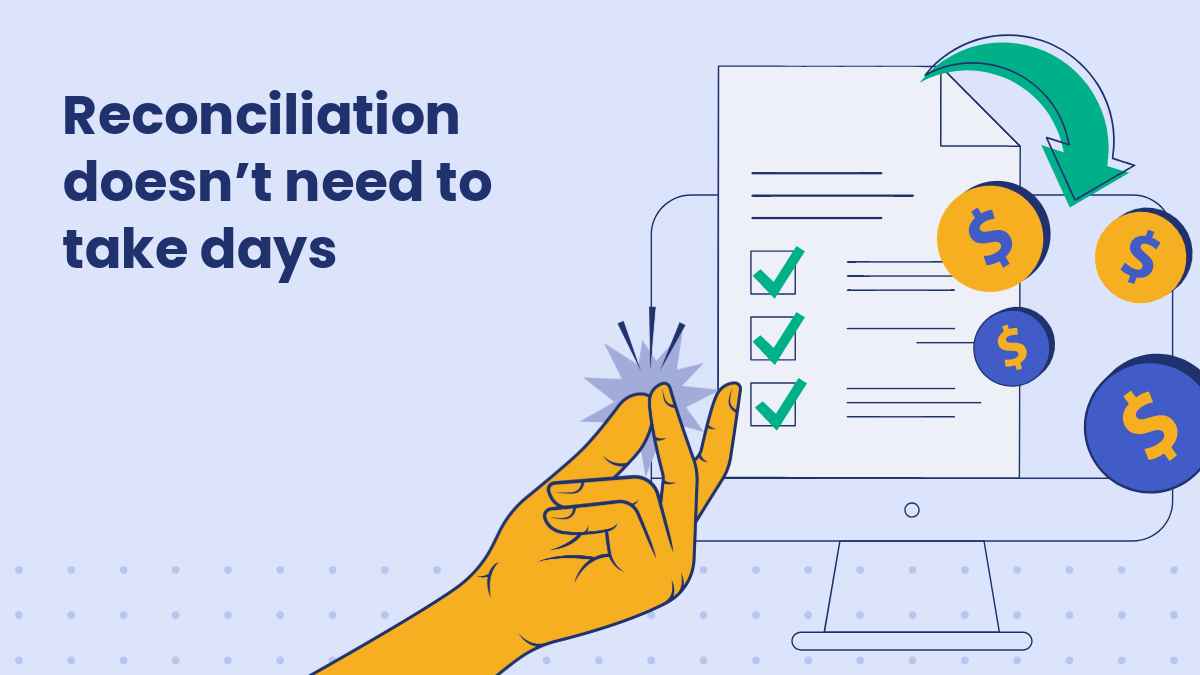


Public agencies operate under heightened transparency and audit expectations. Unexplained discrepancies cause operational headaches and can trigger deeper inquiries that raise public concern.
For many government finance teams, reconciliation is one of the most time-consuming parts of the job — something finance teams across government frequently report. Independent research supports this experience. Public sector entities often struggle with reconciliation and with aligning budgetary and financial reporting frameworks, in part due to inconsistent practices and uneven system capabilities.
Payments flow in from multiple channels, reports arrive in different formats, and staff spend days matching deposits to services before anyone feels confident in the numbers.
Eventually, this time and effort become routine, even though it’s a sign that the underlying systems aren’t working together. Those gaps become most visible during reconciliation.
How the traditional reconciliation processes slow agencies down
Most government payments don’t come from a single source. Residents pay online, by phone, in person, or at kiosks. Each channel often produces its own reports, timelines, and identifiers. As transaction volumes grow, so do the risks of data mismatches, timing differences, and human error.
Fragmentation creates real challenges:
- Deposits don’t always align with the agency’s business day or reporting cycles
- Service-level revenue is hard to trace once funds are pooled
- Manual reconciliation increases the risk of errors
- Finance teams rely on spreadsheets and workarounds to close the books
None of this reflects a lack of expertise. It reflects infrastructure that wasn’t designed for today’s payment volume or complexity.
What efficient reconciliation looks like
Modern payment infrastructure approaches reconciliation differently. Instead of treating it as a clean-up step, reconciliation is built into daily operations.
That means:
- Daily remittance reports aligned to how agencies actually operate
- Clear visibility into cleared, pending, failed, and refunded transactions
- Full transaction visibility so every payment is traceable from payer to service to deposit
- Disbursement details that make it easy to identify funds by service
- One reconciliation process across digital, IVR, POS, and cash payments
When reconciliation is consistent and predictable, it stops being a bottleneck.
So does technology actually reduce friction?
Agencies don’t need to replace their systems of record to improve reconciliation. Increasingly, they’re layering modern payment platforms on top of existing systems to automate the most manual steps.
What technology can do:
- Automated reconciliation tools cut time and errors, even across large transaction sets
- AI and machine learning are being used in FinTech, suggesting similar potential in public finance workflows
- Faster reconciliation gives finance teams real-time cash flow visibility, enabling better liquidity planning and investment decisions
Tools like PayIt are designed to centralize transaction data, standardize reporting, and integrate directly with back-end systems, reducing the need for manual adjustments without disrupting established workflows.
The result: Time back and confidence restored
When reconciliation no longer takes days, finance teams gain more than efficiency. They gain confidence in their numbers, cleaner audits, and time to focus on planning instead of paperwork. Reconciliation doesn’t need to be painful, and for many agencies, it no longer is.
Looking for more content?
Get articles and insights from our monthly newsletter.