The trajectory of digital government and closing the digital divide
How GovTech solutions make government personalized and accessible for everyone
For years, government agencies have been patching together digital solutions to provide more efficient service delivery for their communities. But tech solutions alone don’t ensure equity.
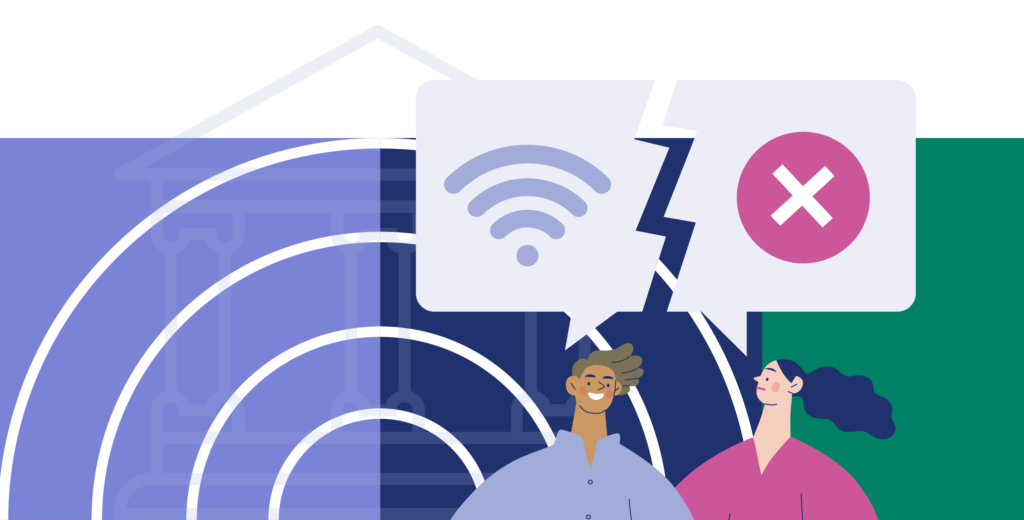
Confusing rules, outdated systems, siloed service portals, spotty internet access, and inaccessible websites cause problems for customers — especially disadvantaged populations. Government services should be for all, not just for some.
Understanding residents is the first step toward digital equity
Communities are made up of a diverse group of people, and the first step in effectively addressing their needs is accounting for the demographics of the people agencies serve.
Understanding the daily lives of residents — and how those experiences (good and bad) shape how people interact with government agencies — is critical to improving digital service delivery. Agencies must ask how age, gender, income level, geographic location, and disability may affect an individual’s access to digital services. Government is not one-size-fits-all, but agencies must know their residents’ daily lives in order to understand how to close the digital divide.
Aim to provide the best outcome for every individual
Every community has gaps that affect access and adoption of digital services. “These inequalities relate to disparities in access, actual use, and use efficacy of digital resources,” says one recent report on the digital divide. Reliable high-speed internet, financial situations, education, tech literacy, and health all factor into how individuals interact with government.
For example, if people have access to the internet, do they know how to navigate it effectively? Do they have access to devices that make it easy? Does your agency support residents who speak a language other than English?
Support digital transformation in your community
Government agencies must provide solutions for residents who don’t have secure internet access, don’t feel confident navigating online services, don’t have the proper devices, and need translations to their primary language. This requires agencies to expand their services to channels that work for all residents (not MOST residents, but ALL residents).
Equity initiatives to bridge the divide:
- Digital skills training programs
- Affordable devices
- Low-cost internet
- Language translations
- Staff member(s) dedicated to digital inclusion initiatives, policies, or programs
Understanding who residents are and their needs is the first step in providing personalized services that meet everyone’s unique situation.
Accessibility is a necessity for equitable digital government service

Digital services and government technology help agencies tailor their services to meet residents’ needs, but the wrong technology can exacerbate customers’ experiences.
Even though your agency has a website or digital payment system, that doesn’t mean it’s accessible to your whole community. The right solution meets people where they are and cuts through barriers to access.
Limited content availability can stem from several factors. For example, navigating traditional websites (without mobile-friendly versions) is difficult if not impossible for users. Similarly, digital platforms built without considering accessibility best practices automatically exclude certain customers.
Deliver more equitable solutions with a diverse government workforce
If you want a government that works for everyone, it only makes sense to ensure that agencies employ a diverse group of people, reflecting the community they serve. Equity in government service delivery starts with an inclusive agency.
Here are a few ways to start your internal equity journey:
- Identify strengths and gaps in training or knowledge
- Evaluate current job descriptions and brainstorm how to expand the pool of
- candidates
- Assess (and possibly rethink) culture and flexibility (e.g., remote or hybrid positions, part-time or flexible hours)
- Focus on mission-oriented hires, especially if you’re willing to train technical skills
- Build mentoring pipelines and relationships for staff
- Only offer paid internships (unpaid internships exclude many applicants)
Web accessibility is at the center of government for everyone
For residents with disabilities, there are often challenges when it comes to accessing government services. These challenges come in many forms. Barriers like lack of video captions, poor color contrast, lack of alt text for images, and complex navigation hinder digital inclusion efforts and maintain the digital divide.
As government agencies modernize, they must continue to strive to accommodate residents with all different types of disabilities. Agencies should be prepared to address digital barriers and adapt technology as more services move to an online-first domain.
An accessible digital environment conforms to the Web Content Accessibility Guidelines (WCAG). The WCAG are technical guidelines for creating an inclusive online environment. While WCAG is not legislation, it is considered the global standard for web accessibility. Meeting its standards requires tailoring online services to meet the requirements of people with diverse needs. Government agencies should conform to WCAG version 2.2 Level AA.
Plus, when an agency conforms to WCAG, it automatically aligns with standards of accessibility legislation, including the Americans with Disabilities Act (ADA), Section 508 of the Rehabilitation Act of 1973, and Accessibility for Ontarians with Disabilities Act (AODA). Most digital entities must conform to some level and version of WCAG.
These are a few of the ways we tailor services to meet WCAG standards:
- Ensure link text describes the link’s purpose entirely. Imagine that you are reading all the links on the page without any context. Would you still understand what that link does? Avoid ambiguous link text like “Read more.” Instead, use “Learn more about eBilling.”
- Ensure you can zoom in up to 200% without any loss of content or functionality.
- Ensure decorative images are identified as such using a null alt text attribute. E.g., alt=”” (with two double quotes). These will be completely ignored by assistive technologies such as screen readers.
The puzzle pieces to personalized digital services: Agency data-sharing, CRM, and resident segmentation
How do agencies understand their constituency? Remove silos and share data.
Data is a valuable tool that agencies can use to understand residents, but resident needs often cross agency boundaries, making it challenging for one agency to get a full picture of its customers.
Inter-agency data-sharing enhances the value of collected data, allowing government services to be more efficient. Agencies can understand residents from a more complete perspective. Not only can agencies analyze resident behavior with their own services, but they can also understand how residents interact with other agencies.
It’s important that agencies invested in datasharing initiatives stress the importance of privacy and transparency in their processes.
A helpful tool for understanding resident data is a Customer Relationship Management (CRM) system. A CRM system helps agencies nurture resident relationships and improve resident experience. It centralizes customer data while making it easy to visualize individual customer journeys.
CRM tools and insights help agencies understand things such as:
- What aging and underrepresented customers need
- Customers’ preferred languages
- Preferred communication method
This allows agencies to build personalized marketing campaigns, improve service channels, train staff on community needs, and create appropriate community programs and policies.
And with more complete data, it’s easier for agencies to provide residents with opportunities to interact with the government online and in person. Government services should be offered in any way the resident desires. (And personalized services increase customer satisfaction.)
Find a technology partner to help enhance data collection and resident channels
The demands of government for everyone (i.e., serving all residents) are immense, and most agencies don’t have the bandwidth to do it alone. Digital transformation is faster, less expensive, and more approachable when agencies work with a government technology partner than when agencies work alone. Partner with a vendor that shares a mission, brings expert tech assistance, improves the agency employee experience, and enhances agency service to residents.
Revolutionizing government interaction: Transitioning from one-size-fits-all to government for everyone
The future of government is service tailored to the individual. This is a far cry from current agency-resident dynamics and requires the government to be proactive, but the trajectory of digital government is government for everyone.
Government for everyone means interacting with government how you want
Being proactive means using data to understand all possible resident needs and providing omnichannel services that properly meet them. Leaning on a generalized digital solution or policy can leave vulnerable populations underserved or overlooked.
Take a human approach to government services
When vetting government technology vendors and implementing digital solutions, put the user first. Use data to understand your residents — and use that information wisely and with care. Consider your customers’ experiences, daily lives, pain points, and how they currently interact with your agency.
And don’t forget to zoom out. Agencies tend to react to isolated issues (a glitchy utility payment portal, for example) but now is the time to start shifting away from one-problem solutions. Instead, move toward a life-event model. Forward-thinking technical solutions can anticipate resident needs and direct those individuals toward helpful services, addressing the full spectrum of community interactions.