Government Payments and Customer Experience Software: A Guide for Buyers

The future of digital government services is already taking shape
The urgency to modernize resident-facing digital government continues to grow. Local government agencies are eager for change, but they’re often saddled with clunky software, complex and siloed systems, and unresponsive legacy vendors.
But it’s absolutely possible to improve efficiency and service delivery quickly by choosing high-impact projects and finding solutions that don’t depend on a major backend system overhaul to work. Innovative state and local agencies have found ways to achieve meaningful gains, leveraging cloud-based solutions and AI to close the gap.
This guide is designed to help both business and IT professionals define their purchase criteria and evaluate vendor offerings against them. It speaks specifically to solutions addressing resident interactions and payments across a wide range of use cases, but much of the advice is worth considering in any government software purchase.
Here are the main points we’ll cover:
How to lead digital service modernization in your agency
Key requirements for any technology vendor your agency is considering
The role of user experience, for residents and agency staff
Technical must-haves for a payments solution
How to evaluate a vendor’s partnership orientation to find the right fit for your needs
Government agencies can improve digital services without replacing core systems
Agencies can deploy effective online services and see meaningful efficiency gains without waiting for a large, centralized modernization initiative or for other projects to be completed. Success depends on a few key actions:
Identify a champion
Find someone who will work across your organization to drive excitement about improving digital experiences while identifying the key resources and processes that need to be involved. This person will work as a change agent, generating excitement for the project by sharing a vision for the future and the steps to get there.
Ideally, the champion has the authority to make purchase decisions or a significant influence on budget allocations. They might sit in IT or on the business side of the agency, but they are really effective at working cross-functionally.
Start with focused use cases and scale intentionally
Identify one or two high-impact use cases or projects, and plan to add new services as you achieve velocity and adoption. Where is the biggest friction in your agency operations? What do residents frequently complain about, or where do they get stuck and need help? What processes are paper-based today, or require the use of different software systems that don’t connect to each other? Answering these questions helps point the way to your first area of focus.
Narrowing to the highest-impact work simplifies the initial implementation process, the set of potential integrations, and the change management required to launch. As your agency begins to realize the benefits, other programs will follow.
High-impact use cases meet one or all of these criteria:
Measurable improvements to operating efficiency
High-frequency interactions (e.g., monthly bills or renewals)
Improves the speed of revenue collection or reduces delinquency
Reduces support inquiries
Plan a communication strategy early on
People are eager to do business with you digitally, but that doesn’t mean that they will do so automatically. You’ll need to make them aware of the service. Plan a communication strategy and market the solution effectively. Ask vendors if they will help you drive adoption; a true partner will be invested in helping you drive channel shift and achieve your goals.
Find a partner, not just a vendor
Lots of vendors can sell you software to manage digital service delivery and payments. But the most successful programs stem from a deeper partnership between you and your provider. If a vendor isn’t asking you about the goals that prompted you to evaluate their solution, consider this a red flag.
A good partner will help you think through your objectives, map a solution to achieve them, and collaborate with you to define the metrics you will use to measure outcomes. You will understand the typical timeline for implementation and target outcomes to materialize so you can manage expectations across your agency and with your residents.
Can the vendor help market the new service(s) to residents?
Shifting residents to payment interactions brings significant benefit to your agency. Online transactions have a lower per-interaction cost than in-person channels, which bring additional PCI compliance and overhead costs. But changing resident behavior requires investment of resources to drive awareness and adoption. Can the vendor help market the new service(s) to residents?
We recommend that you understand whether a vendor can assist in driving adoption, what they see as reasonable goals for adoption, and what tactics and programs they recommend to hit those targets.

Do they have skin in the game?
Most software is sold today as a recurring subscription, or, in the case of custom software, a very large project cost. In these models, the vendor has very little incentive to help you drive adoption or meet other goals with their solution, especially when contract durations are long.
Per-transaction fee models offer a unique opportunity for both parties to be incentivized by online interactions. Not only are online payments less expensive for you to deliver (even if you absorb the fees), but under this pricing model, the vendor does not collect revenue until the solution is live.
Look for service providers with a track record of close collaboration with government agencies to drive online adoption.
Is there continuous feedback and an improvement cycle?
The best software providers continuously improve their solutions by incorporating user feedback. Find a vendor who proactively seeks feedback and user data from your staff and residents. They should use this data to improve their offerings and to identify areas to collaborate with you to improve your success with their products.
Do they have public sector expertise?
Government agencies operate in a unique context, shaped by legislative and regulatory constraints. This results in business processes that may not be readily understood by industry-agnostic vendors. But agency leaders don’t have time to explain all this so that a vendor can adapt.
At a minimum, find a partner with a significant roster of government customers and an account team with a public sector focus.
Using AI to streamline and improve vendor selection
Generative AI tools such as ChatGPT and Claude can be useful throughout the process of buying new software. Consider using AI tools at various stages of the process:
Draft requirements and stress-test them.
AI can be useful in synthesizing stakeholder interviews and resident feedback to identify and prioritize requirements. Once drafted, AI tools can help you identify and close ambiguities, gaps, or contradictions. Ask AI to flag requirements that may be too restrictive to get sufficient participation, or too vague to render comparable bids. You can also ask AI to create a weighted scoring matrix based on your requirements.
Research the market and vendors.
AI can provide a summary of the market landscape for solutions, the latest innovations, and known players. Ask it to look at analyst reports, press releases, procurement databases, and industry publications for a market overview, and to assemble a list of potential vendors.
Vendor list and comparison.
AI can help you narrow your consideration set or identify areas to probe for more information. Share your requirements, and ask it to create a structured table of data about each vendor that includes capabilities, known feature gaps, customer feedback, awarded contracts, and known procurement vehicles.
Evaluate proposals.
Normalize and summarize vendor proposals for side-by-side comparison and to flag missing required features or non-compliant sections. Prompt it to compare performance indicators, service-level agreements, or other benchmarks against industry norms.
Keep in mind that for complex tasks (like market and vendor research), you will get better results by breaking up the overall request into separate steps, prompted one at a time. This will ensure you get the most detailed response. You can refine the output from there with iterative prompts such as “Now adjust the weighting in my requirements to prioritize security and compliance over price.”
Think of AI tools as a helpful sidekick in your process. But keep in mind these caveats:
- Verify everything. AI can hallucinate vendor details, contract vehicles, or regulatory citations. Examine the citations provided, and verify everything before using it.
- Maintain human judgment. AI should support your process — not the other way around. While AI can help you generate a long list of potential vendors, it is not well-suited to assess whether a specific vendor can be a strong partner to your team.
- Watch for bias. AI is trained on historical data. It may reflect incumbent vendor advantages or outdated market views. Actively probe for emerging vendors.
- Document your use. Keep records of how and where AI tools were used to support defensible award decisions.
Give yourself a head start for the best outcome
In the public sector, software purchasing is typically driven by one of three factors: the need for new functionality, dissatisfaction with a current vendor, or an upcoming contract expiration. In practice, many agencies don’t begin evaluating alternatives until just a few months before an existing contract ends.
When the buying process starts late, agencies are often forced into a reactive posture. Limited time leads to RFPs that are written to replicate existing functionality rather than improve upon it. Procurement teams focus on minimizing disruption, not on evaluating what is possible in the current market and with the current state of digital solutions. Implementation timelines get compressed, risk tolerance drops, and agencies feel more pressure to renew with the incumbent vendor — not because it is the best option, but because it feels like the safest one.
This pattern is common and understandable, but it has real consequences. Agencies miss opportunities to have new capabilities, improve operational efficiency, and deliver better service to residents. The procurement process becomes a mechanism for maintaining the status quo rather than advancing organizational goals.
Starting the buying process well in advance of a contract expiration leads to better outcomes.
Earlier planning gives agencies time to:
Assess emerging needs and pain points beyond current system limitations
Define measurable outcomes targeted as part of the project
Explore available solutions and market capabilities
Write RFPs that emphasize improvement, not replacement
Build realistic implementation timelines that reduce internal risk and anxiety
SaaS solutions are the standard for modern government technology
Legacy government technology — designed around on-premises infrastructure and periodic upgrades — places most of the operational burden on the agency.
- SaaS solutions are a platform for innovation. Cloud-based software gives you access to a steady stream of new features and capabilities that are deployed across a vendor’s subscriber base. Unlike custom-built software, SaaS solutions help you keep pace with technological improvements without a change order or lift-and-shift upgrade.
- SaaS shifts responsibility to the vendor. They manage maintenance, compliance, and security. And since SaaS platforms are cloud-based and continuously updated, agencies can adopt new capabilities without disrupting operations.
- SaaS platforms apply security updates consistently and proactively across the entire system, rather than relying on periodic upgrades or on internal staff capacity to address emerging threats. This reduces risk, improves resilience, and helps agencies maintain a stronger security posture over time.
- SaaS platforms are more flexible and can easily adapt as policies, programs, and resident expectations change. Composability replaces customization, and incremental updates replace disruptive system overhauls.
Configurable platforms replace custom-built government software
Local laws, regulatory requirements, and unique community needs mean that every government agency has a different way of operating, leading to specific technology requirements.
More traditional tech vendors have solved this problem with seven- and eight-figure custom software builds that are hardcoded and slow-moving. But updating custom software can be miserable — or even impossible. Engineering hours, re-coding, approvals, and redeployment add up to a lengthy and expensive process.
Custom-built software doesn’t scale at the pace of innovation or at the pace of resident expectations.
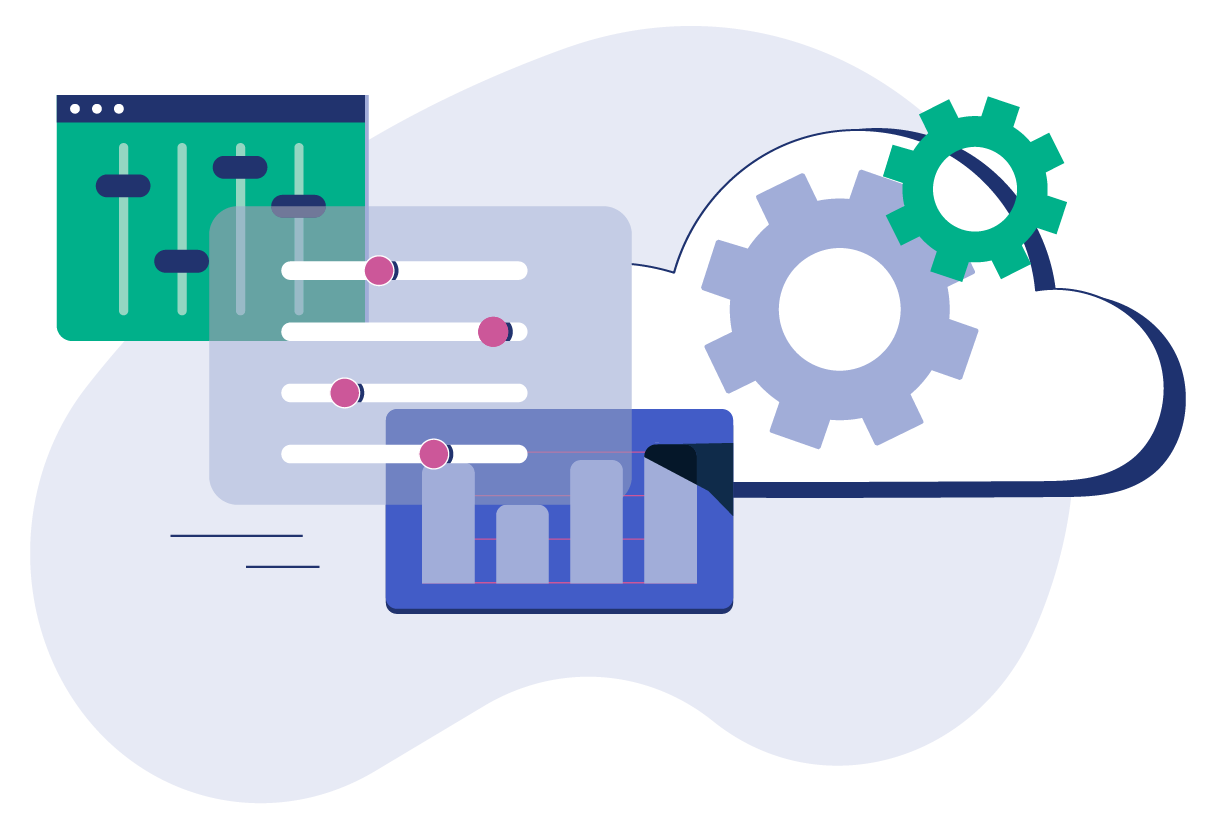
Configurability is the modern answer to this challenge. A configurable software solution is made of “building blocks” that can be implemented to address various workflows, data models, and integrations, with little to no coding required. These modules can be quickly adjusted and redeployed as your agency’s needs evolve, creating a resilient, dynamic solution.
Ask your vendors how their solution addresses configuration and reconfiguration as your needs change and new use cases emerge. If the answer involves deploying their engineers, keep looking for other vendors who can demonstrate a high degree of low-code or no-code configuration. Include IT staff in this evaluation to pressure-test claims.
Deliver a complete custom experience — not just a payment page
Clunky technology undermines digital adoption. Traditional payment solution providers have made it pretty easy to stand up a payment page; a standalone payment widget may move money, but it doesn’t do much to help residents find the right services. When payments are treated as an isolated step, the experience feels disconnected and confusing, even if the transaction technically succeeds.
The best user experience makes the process simple for the largest variety of users possible. Picture the person in your life who is the least sophisticated about tech: Could they readily understand the workflow?
Ask vendors about how they design their products. Listen for usability testing, focus groups, and customer feedback. Low rates of support calls are a key indicator that the solution is designed for usability. Ask your vendor to demonstrate the experience and discuss why they designed the solution the way they did. Even better: experience the workflow as a user.
Pay special attention to:
- What happens before and after the transaction
- How payment history, receipts, and support requests are handled
- Whether features like automatic payments or installments are configurable according to your requirements
Well-designed experiences improve completion and reduce support needs
An intuitive, well-designed experience encourages residents to complete their transactions online and removes guesswork, reducing the operational burden on agency staff. The best solutions achieve success rates in excess of 98% without engaging support, with the balance mostly resolved in a single interaction with the end user.
Service providers should go beyond the overall volume of transactions and the credit card brand mix as indications of success.
- Ask for the number of successful transactions as compared to those that were abandoned, incomplete, or resulted in a phone call.
- Examine the rate of growth in online transactions, registered users, and revenue and transaction growth among the vendor’s existing customers.
- Experience the vendor’s solution yourself — go through a transaction workflow in one of their live implementations.
Unify government payments into one connected experience
Transacting with government agencies should be integrated in a single app that brings together multiple use cases across agencies and levels of government. And payment credentials should be usable across use cases, emulating an online bill pay experience offered through a bank — one login, many bills paid without worry.
There are many ways to pay, but focus on the ones you need
Most vendors support multiple channels and methods for payment, matching resident desires: In our 2025 consumer survey, 74% of respondents said they expect to be able to use their preferred payment method for a government transaction.
But don’t get distracted by “shiny objects” like accepting crypto, and don’t get convinced your agency needs to offer every payment channel and method. Tried-and-true payment methods are the ones to focus on: Most people still prefer to pay government bills with credit cards, debit cards, or ACH. If you’re looking to add additional options, consumers also value mobile payments (like Apple Pay and Google Pay) and peer-to-peer (e.g., Venmo or Zelle) payments.
Offering each and every payment method doesn’t improve the resident experience. It’s more important to choose a vendor that prioritizes innovation so your payment solution can evolve alongside resident preferences.

Digital payments expand access to government services
Adding digital service delivery makes it easier for people of varying abilities to engage with your agency and improves service delivery for people who are unable to visit your location in person due to family or work commitments.
A technology experience lacking standard accessibility measures alienates employees and residents and can leave you exposed to civil action and costly web redesigns. Only engage solution providers who meet or exceed WCAG 2.0 AA requirements.
Digital government services shape public confidence
The quality of digital services directly influences how residents perceive government. Research by Deloitte indicates that digital service quality is a primary driver of trust: When a resident rates an agency’s digital services as easy to use, their trust in that agency is nearly four times higher than those who have a neutral assessment of those services.
Your solution should inspire confidence when customers use it. Residents should see the official seal of your agency, their detailed account history, and clear security messaging. This kind of experience drives repeat usage.
Agencies deserve a better user experience, too
A solution for digital service delivery should be as easy to own and manage on the back end as it is for residents on the front end. Tasks should be intuitive, even for solutions used by specialists. A user-friendly experience — one that cuts unnecessary steps and confusion — reduces training time and costs, increases user confidence (making change management easier), and makes internal workflows more efficient.
Accelerate time to revenue
Intuitive digital experiences mean more completed transactions, on the first try. And payment reminders help ensure more on-time payments and reduce delinquency, so your agency can improve time to revenue and settlement.
Simplify reconciliation and improve financial visibility
Modern platforms can pull data from spreadsheets, processors, and internal records together, enabling faster, more accurate reconciliation while providing real-time insight into revenue, settlements, and exceptions. The result is less time spent tracking down discrepancies and more time focused on higher-value work.
Track performance with real-time dashboards and reporting
It’s important to understand how well a new digital service platform is working for residents, and that requires clear visibility on the back end. Look for a solution with built-in analytics that includes reporting, transaction details, and transaction management (refunds, adjustments, and more). This reduces support burden and enables staff to quickly resolve issues without manual work.
Modern platforms should offer:
- Real-time dashboards with the ability to filter, search, and drill into transaction-level data. Instead of relying on static reports, teams should be able to access insights directly — whether they’re tracking revenue, monitoring adoption, or identifying trends in user behavior.
- Centralized reporting consolidates all your data into a single system, enabling agencies to avoid manual reconciliation across tools and improve accuracy and efficiency.
- Role-based access to ensure the right teams can get the information they need without creating bottlenecks.
Ultimately, strong reporting tools help agencies move beyond tracking activity to improving outcomes, making it easier to spot issues early, optimize service delivery, and support long-term adoption.
The technical stuff you should keep in mind
As you evaluate vendors, it’s important to look beyond user-level functionality and understand the capabilities behind the scenes. The technical foundation determines whether your solution will scale, adapt, and continue to meet evolving expectations.
Open APIs vs. walled garden: Open APIs are better for you and for your tech stack
In any organization, multiple technology systems must communicate and share data, and the public sector is no different. Application programming interfaces (APIs) are at the core of this process. APIs connect systems and address data siloing, enabling your agency to reduce manual or duplicative processes.
There are two approaches to APIs, and the difference is important to consider:
- Proprietary “walled gardens” limit flexibility
- Open APIs enable agency leaders to transfer their data among many systems
Walled-garden vendors offer a limited set of API integrations to their favored partners. They assess fees for custom integrations with other systems or to reconfigure how those systems connect in the future. These vendors may point to ease of implementation or leading solutions as a justification for this model — and that sounds pretty good, especially if your current tech stack already lives inside their walls and you never plan to change it.
But openness has emerged as the better approach to API integration, both within and outside the public sector. This shift toward openness is also reflected in the now-widespread practice of government agencies providing open API access to their own datasets.
APIs should be interoperable
Vendors with a limited set of integrations, or that promote a single solution from end to end, hinder your ability to meet the needs of your agency and community with the best possible technology.
Remember that you own your data.
You should have the flexibility to buy what is best for your agency, and your vendors should offer open APIs to any system.
Technology vendors should be able to integrate even if there’s no API
Look for a vendor that is capable of integrating with all types of systems, from brand new to 20-plus years old. They should be able to provide references of clients for whom they have delivered integrated solutions for legacy systems.
Your vendor’s tech skills should be at least as good as yours
Large-scale vendors may have a deep bench of resources to draw from during an API implementation, but that doesn’t mean they understand your specific data needs. Depending on the complexity and age of your core systems, vendors may rely heavily on your team to develop and deploy the API. Even worse, they may claim they can’t integrate with your system at all.
Select a vendor who brings technical resources so that your IT staff can continue to focus on other priorities. Look for vendors that:
- Ensure the integrity of websites that accept payments
- Are capable of monitoring security compliance measures for payment gateways
- Have experience in building and deploying integrations
Evaluate how vendors apply AI to improve customer experience
For the first time in two decades, artificial intelligence replaced cybersecurity in the top spot on the NASCIO State CIO Top Ten Policy and Technology Priorities in 2026. And by now, most state and local governments are either testing or actively using AI in both back-office operations and resident-facing services.
Look for evidence of AI in production, not just on the roadmap
There’s a meaningful difference between a vendor that has shipped AI features and one that is promising them. Ask vendors to walk you through AI capabilities that are live today — not in beta, not planned for a future release. What problems are they solving? Who is using them? What results have they measured?
Vendors should be able to demonstrate how AI features can help you streamline operations, improve response times, or enhance the resident experience. Be skeptical of vendors who lead with AI terminology but struggle to point to specific, deployed features with measurable outcomes.
Assess whether the vendor’s AI roadmap matches your pace
Government agencies can’t afford to be a vendor’s proving ground. A good vendor should be able to articulate a clear AI roadmap — not just a list of features, but the underlying logic for how and when capabilities will be prioritized, tested, and released. That roadmap should reflect an understanding of the risk tolerance, compliance requirements, and organizational readiness typical of government environments.
Ask vendors how they sequence AI adoption for government customers. Do they offer a phased approach that lets agencies start with lower-risk, high-value use cases before expanding to more complex applications? Do they have documented criteria for what makes a feature ready for government use — including how they handle accuracy thresholds, regulatory review, and change management support? A vendor that tries to push your agency to adopt capabilities before you have the policy framework or staff readiness to support them is a vendor whose incentives aren’t aligned with yours.
Ask how the vendor uses AI in its own operations
A vendor’s internal use of AI is a strong proxy for their overall maturity, and it has a direct bearing on the cost and service levels they can sustain over time. Vendors who apply AI to their own support operations, quality assurance, fraud detection, and infrastructure management are better positioned to keep costs stable and pass efficiency gains on to customers. Ask vendors how they use AI in development, for product quality and testing, and whether internal AI adoption has reduced their operational cost structure. A vendor that has not embraced AI in its own operations may be less equipped to help you realize efficiency gains in your environment.
Understand how AI tools are governed
Ask vendors how they address accuracy, data privacy, and bias, and what level of transparency and human oversight is built into their solutions. Governance isn’t just a checkbox — it’s an indicator of organizational maturity. Look for vendors who can speak specifically to:
- Model transparency
Can the vendor explain, in plain language, how a given AI feature reaches its outputs? “Black box” models that produce recommendations without explainable logic are a poor fit for government, where decisions affecting residents often need to be documented and defensible. - Bias and fairness testing
Has the vendor audited its models for disparate outcomes across demographic groups? This is especially important in resident-facing applications, where AI-assisted decisions may intersect with benefits, payments, or service access. - Data privacy and residency
How does the vendor ensure that resident data used to train or inform AI models stays within appropriate boundaries? Is data used across customers, or kept strictly partitioned? - Human oversight and override
Are there meaningful checkpoints where staff can review, correct, or override AI-generated outputs? Automation that removes human judgment entirely is a governance risk most agencies aren’t ready to accept.
Evaluate data readiness as a prerequisite for AI effectiveness
AI is only as effective as the data behind it. Ask vendors how they prevent siloed or inconsistent data from undermining results. This means asking about data normalization across modules or agencies, how the platform handles incomplete or legacy data during onboarding, and what data hygiene and validation tools are built into the workflow. Vendors should also be able to tell you how they monitor for model drift — the degradation of AI performance that occurs when the data environment changes over time — and what their process is for retraining or recalibrating models in response.
If AI isn’t live yet, evaluate the foundation
If AI isn’t a live feature yet, evaluate whether the platform can support AI over time. This includes the ability to integrate with your existing systems, scale across additional use cases, and adapt as technology and policy evolve. Look specifically for open APIs, a modern data architecture that doesn’t trap information in proprietary formats, and a vendor track record of delivering on announced capabilities. A future-ready platform isn’t just one that claims to support AI — it’s one that has already made the architectural investments that make AI adoption feasible without a costly rip-and-replace.

The right vendor can help improve your security posture
Security breaches can cost millions to resolve and destroy resident trust. Security requirements are always evolving, and as you evaluate vendors, you should closely scrutinize their level of sophistication for compliance and security.
Understand and reduce PCI compliance risk across all payment channels
Handling resident payment data introduces significant security, compliance, and operational risk. Any time your agency touches payment credentials, you are responsible for meeting PCI requirements, which can be costly and time-consuming to manage.
A strong vendor partner will take on as much of the burden as possible across payment channels, but PCI compliance is a shared responsibility. It’s critical to understand exactly where your vendor’s responsibility ends and yours begins. Ask detailed questions about how payment data is handled in every scenario and what controls are in place to protect it.
The right partner will not only reduce the scope of your PCI obligations but also help you avoid manual processes that increase risk, such as staff handling or entering payment information — ensuring you’re fully confident in the protections that remain your responsibility.
… but PCI is just the beginning
Any payments vendor should have expertise in PCI compliance — run, don’t walk, away from any that do not. Your solution provider should not rely on your agency to handle the extensive protocols and regular system testing.
Choose a vendor who offers a fully-hosted solution on a government-grade cloud platform that prioritizes security. Your vendor should work with you to reduce your PCI burden by driving interactions online, where they handle the security and compliance measures.
Look for vendors that exceed baseline security and compliance requirements and whose systems are designed to prevent malicious attacks and data exposure.
Government has stringent requirements for cloud hosting
Every major cloud hosting provider offers a solution designed for government agencies. These bring government-grade security protocols and logically isolate data from their private sector offerings.
Government cloud databases are built with additional defense measures to ensure the security of government data. These include compliance with FedRAMP High, DoD Security Requirements Guide, Impact Level 5, and CJIS. Make sure there is a vetting process that offers credentials only to verified government entities, contractors, and educational institutions.
Expect your payment provider to host your data in a government-grade cloud, especially if they also serve private-sector clients. These include AWS GovCloud, Microsoft Azure Government, and Google Assured Workloads in the US; and these Government of Canada Cloud Framework Providers.
Tokenization and encryptionare must-haves
Tokenization and encryption protect resident payment credentials from bad actors.
A token obfuscates a resident’s credential data and prevents exposure of credit card numbers, CVCs, and expiration dates. But while tokens are standard practice in the payments realm, they are only the first line of defense.
Any data entered on your payment platform should be encrypted both in-flight and at rest using strong encryption keys (AES 256 or as specified by NIST Special Publication 800-131A Revision 1) to prevent it being scraped by malicious code.
Continuous platform monitoring is also critical
Your vendor should employ both automated scans (platform monitoring) and human intervention (incident review) to ensure the complete privacy and security of your residents’ data. Ask for complete documentation of their application security processes, their notification protocols, and understand what they require from you to maximize protection.
Check references

The best vendors have customers who are eager to tell their story. Invest the time to conduct strong reference checks — and don’t stop at the references the vendor provides. Leverage your professional network to identify other customers who might be willing to share their experiences.
Here are a few questions to include in every reference check:
- What were your motivations for investing in this solution?
- Have you achieved your desired outcomes?
- What are they and how are they measured?
- How long did your implementation take?
- Was that faster or slower than expected?
- What resources did you have to bring to the table to get implemented?
- How often do you speak with someone on your account team, and what is the nature of those engagements?
- How often have you engaged with their support team?
- How quickly did they resolve your issue(s)?
- What do you wish you had known at the time, that you know now about this vendor?
- How would you rate the quality of the training?
- How much training was required for your staff to achieve proficiency with the solution?
- If payments are part of the solution, are disbursement and settlement reports accurate and easy to understand?
- What does the finance team wish was included in the solution?
- What portion of your payments were conducted online before implementation, and what portion now?
- How does this map to your initial goals?
- Has the vendor provided you with adoption marketing support? Describe that process.
- How many resident support calls is your office receiving?
- Is this more or less than your previous vendor?
Start with the end in mind
When working with interoperable technology, a reverse-engineering approach can be helpful — especially if legacy systems are involved.
So where do you start? First, focus on the big, end goal, then create a manageable plan that details the smaller steps you’ll take to get there. Success for your agency might include things like shorter wait times for residents, fewer manual processes, redeployed staff, improved resident satisfaction, and improved sustainability.
Imagine where
you’d like to be
in the future:
What does
success look like?
Document the
precise problems
you’re looking to
solve.
Examine the
technology your
agency is currently
using and where
you have gaps.
Create a plan
to accomplish
smaller goals that
lead directly to your
larger objectives.

How to get a software deal done
Government sourcing doesn’t have to be a complicated, drawn-out process. There are ways to go faster, including cooperative purchasing agreements and riding on a neighboring agency’s existing contract.
If numerous decision-makers at your organization will have to weigh in on the decision to buy or not, engage them early to understand their requirements and concerns. Understand early on what you would need to get buy-in from key departments, particularly IT and finance.
Here are some key questions to shape the dialogue:
Finance
- How is the finance team handling disbursements from the current vendor?
- Are there multiple disbursements for a given day, or is an entire day’s business processed and settledat once?
- What does their ideal settlement schedule look like?
- Are there certain data fields or reports they need to do their jobs day to day?
- How many calls are your collectors’ staff fielding during peak and off-peak seasons?
Information Technology
- Does your IT department have any security requirements that need to be met?
- What back office systems do you employ that would require integrations?
- Are there APIs available for any of those systems? Are those APIs open and configurable?
- What data fields are currently being exchanged? Are there any data gaps?
- Are your data systems on-premises or in the cloud? Are they managed internally or by a consultant?
- How are current integrations accessed — VPN, Firewall, etc.?
Making the case
Work with your internal contacts and preferred vendor to understand the answers to these questions. Your vendor should be able to perform a feasibility study and provide a business case that clearly outlines how departmental needs, including the requirements you uncover during your discovery process, will be addressed.
Procurement
If you are unfamiliar with procurement processes in your department or agency, talk to the purchasing department to understand the process. Create a business case for your procurement department that clearly outlines your research to unlock a non-competitive method for purchase. If a formal RFx process is required, your vendor should be familiar with competitive contracts and can provide you with information that can help shape the RFx.


Buyer’s Checklist: Digital Customer Experience and Payments
Use this checklist to evaluate vendors. Check off each requirement as you review demos, proposals, and references.